
Long-Tail Keywords: Why They Matter for SEO
In the world of SEO, choosing the right keywords is one of the most important steps to attract visitors from search engines. Many beginners focus only on short and highly competitive keywords such as “SEO,” “digital marketing,” or “online marketing.” However, ranking for these keywords can be difficult, especially for a new website.
This is where long-tail keywords become useful.
Long-tail keywords are longer and more specific search phrases that usually have a clearer search intent. They can help websites attract a more targeted audience, especially when competing with established websites.
What Are Long-Tail Keywords?
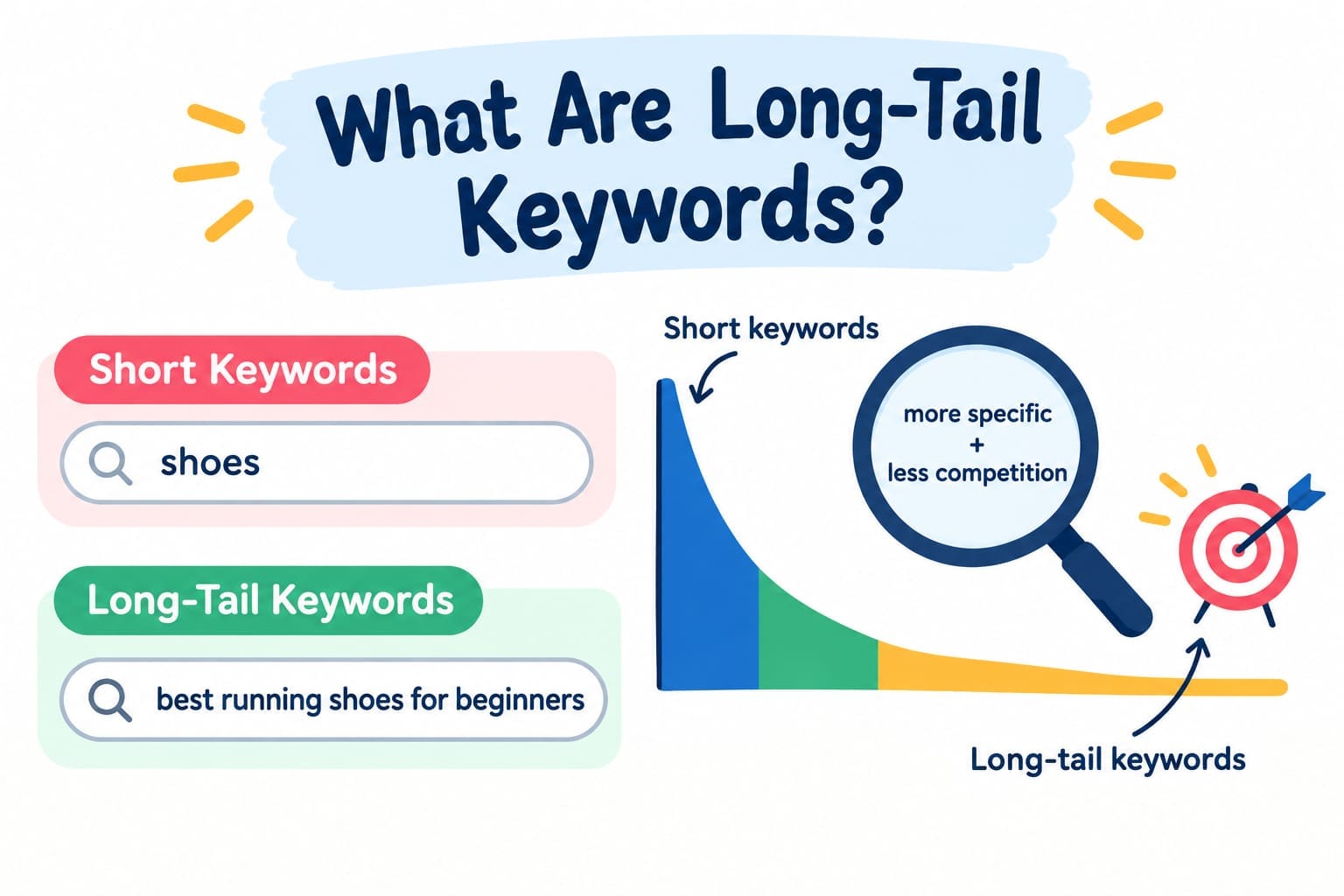
Long-tail keywords are specific search phrases that usually contain three or more words.
For example:
- SEO → Short keyword
- SEO tips → Short keyword
- SEO tips for beginners → Long-tail keyword
- Best SEO tips for beginners → More specific long-tail keyword
- Best SEO tips for beginners to improve Google rankings → Highly specific long-tail keyword
The more specific the keyword becomes, the smaller and more targeted its potential audience can be.
For example, someone searching “SEO” may simply want to understand what SEO means. But someone searching “how to do SEO for a new website” has a much clearer purpose.
Why Are Long-Tail Keywords Important for SEO?
1. They Are Usually Less Competitive
Short keywords can have thousands of websites competing for the same search term. A new website may find it difficult to rank for them.
Long-tail keywords are generally more specific and can have lower competition.
For example, instead of targeting:
“digital marketing”
you could target:
“digital marketing strategies for small businesses.”
The second keyword gives you a more specific topic to create content around.
2. They Help Target Search Intent
Search intent means understanding what a user wants when they perform a search.
Consider these two searches:
“Google Ads”
and
“how to create a Google Ads campaign for beginners.”
The first search has broad intent. The second search clearly indicates that the person wants to learn how to create a campaign.
By targeting specific long-tail keywords, you can create content that directly answers the user’s question.
3. They Can Attract More Relevant Traffic
Getting thousands of visitors is not always the main goal of SEO. What matters is getting visitors who are actually interested in your content.
For example, a digital marketing blog could target:
“best free SEO tools for beginners”
instead of simply targeting:
“SEO tools.”
Visitors searching for the longer phrase already know what they are looking for, making the traffic more relevant to your content.
4. They Are Great for Beginner Websites
New websites often have limited authority compared with large websites.
Trying to rank immediately for highly competitive keywords can be challenging. Long-tail keywords provide an opportunity to target smaller, specific topics and gradually build organic visibility.
A good strategy is:
Specific keywords → Quality content → Organic traffic → Website authority → More competitive keywords
5. They Help You Create Better Content
Long-tail keywords often represent questions, problems, or specific topics.
For example:
“how to find keywords for a blog”
can become a complete article covering:
- What keyword research is
- How to find keywords
- Keyword search volume
- Keyword competition
- Long-tail keywords
- Keyword research tools
- Examples
Therefore, long-tail keywords can also help you discover useful blog topics.
How to Find Long-Tail Keywords
There are several ways to find long-tail keywords for your website.
Google Search
Start typing your main keyword into Google and look at the auto complete suggestions.
For example, type:
“digital marketing for…”
Google may suggest searches related to beginners, small businesses, students, strategies, and other topics.You can also check the “People also ask” section and related searches.
Google Keyword Planner
Google Keyword Planner can help you discover keyword ideas and understand metrics such as search volume and competition.
You can enter your main topic and explore related keyword ideas.
For example, if your topic is SEO, you might discover phrases such as:
- SEO tips for beginners
- SEO tools for beginners
- how to improve website SEO
- on-page SEO techniques
- SEO checklist for new websites
Google Search Console
If your website already receives organic impressions, Google Search Console can help you discover search queries for which your pages are appearing.
These queries can provide ideas for creating new content or improving existing articles.
How to Use Long-Tail Keywords in a Blog
Finding keywords is only the first step. You also need to use them naturally.
You can include your primary long-tail keyword in:
- Blog title
- H1 heading
- Introduction
- H2/H3 headings where relevant
- URL/slug
- Meta description
- Image alt text when appropriate
- Main body content
However, avoid repeating the keyword unnecessarily.
For example, if your target keyword is:“SEO tips for beginners”don’t write it in every paragraph. Instead, use natural variations such as:
- beginner SEO tips
- SEO strategies for beginners
- basic SEO techniques
- SEO best practices
This makes the content easier to read and avoids keyword stuffing.
Long-Tail Keywords vs Short-Tail Keywords
| Short-Tail Keywords | Long-Tail Keywords |
|---|---|
| Usually short | Usually longer |
| Broad meaning | Specific meaning |
| Often highly competitive | Often less competitive |
| Broad audience | More targeted audience |
| Difficult for new sites | Useful for new websites |
For example:
Short-tail: “Email Marketing”
Long-tail: “Email marketing strategies for small businesses”
Both keywords are valuable, but the second one provides a much clearer idea about what the searcher wants
Common Mistakes to Avoid
Keyword Stuffing
Don’t repeatedly use the same keyword just to increase keyword density.
Choosing Keywords Without Search Intent
A keyword may have good search volume, but if it doesn’t match your content, it may not bring useful visitors.
Ignoring Content Quality
Long-tail keywords don’t guarantee rankings. Your content should still be useful, original, well-structured, and relevant.
Targeting Too Many Keywords in One Article
Focus on one primary topic and use related keywords naturally rather than trying to rank one article for dozens of unrelated searches.
Final Thoughts
Long-tail keywords are an important part of a practical SEO strategy, especially for new websites and beginner bloggers. They allow you to target specific searches, understand user intent, create focused content, and compete for keywords that may be more achievable than broad terms.
Instead of focusing only on keywords with high search volume, look for relevant keywords that match what your audience actually wants to know.
A smart SEO strategy isn’t always about getting the biggest number of searches. It’s about getting the right searches and providing the best answer.
Start with specific long-tail keywords, create genuinely helpful content, and build your website’s organic visibility over time.