
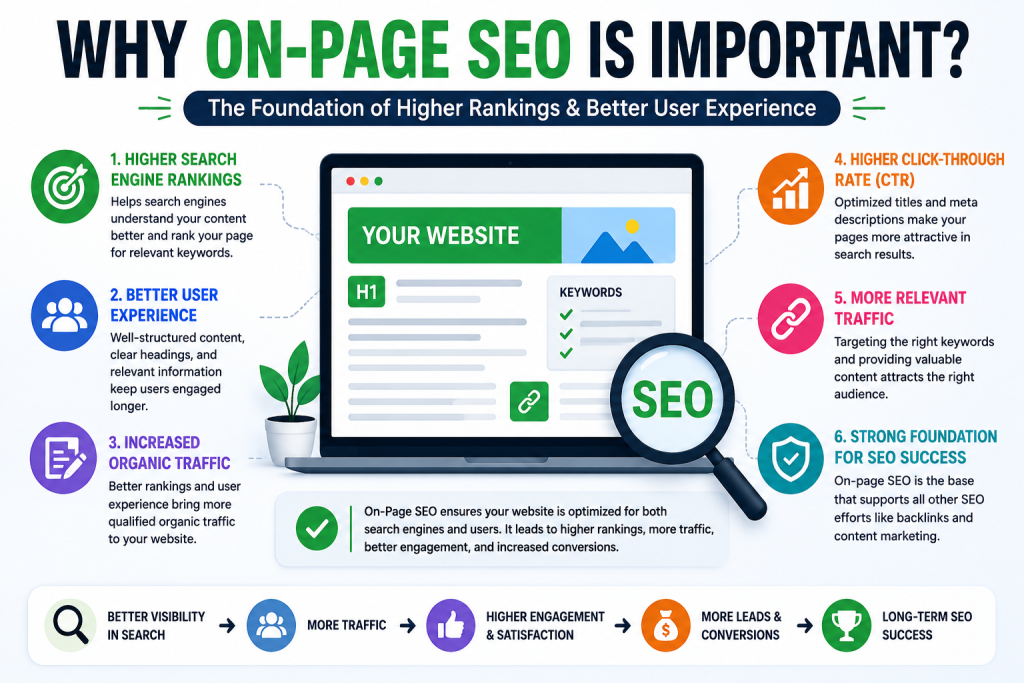
On-Page SEO is an important part of Search Engine Optimization (SEO). It refers to the techniques used to optimize the content and elements of a web page so that search engines like Google can better understand the page and rank it for relevant searches. Good On-Page SEO can also improve the user experience and make your website easier to navigate.
What is On-Page SEO?
On-Page SEO means optimizing the elements that are present directly on your website. It includes your content, headings, keywords, images, URLs, title tags, meta descriptions, and internal links.
The main goal is to create useful, relevant, and easy-to-understand content for both users and search engines.
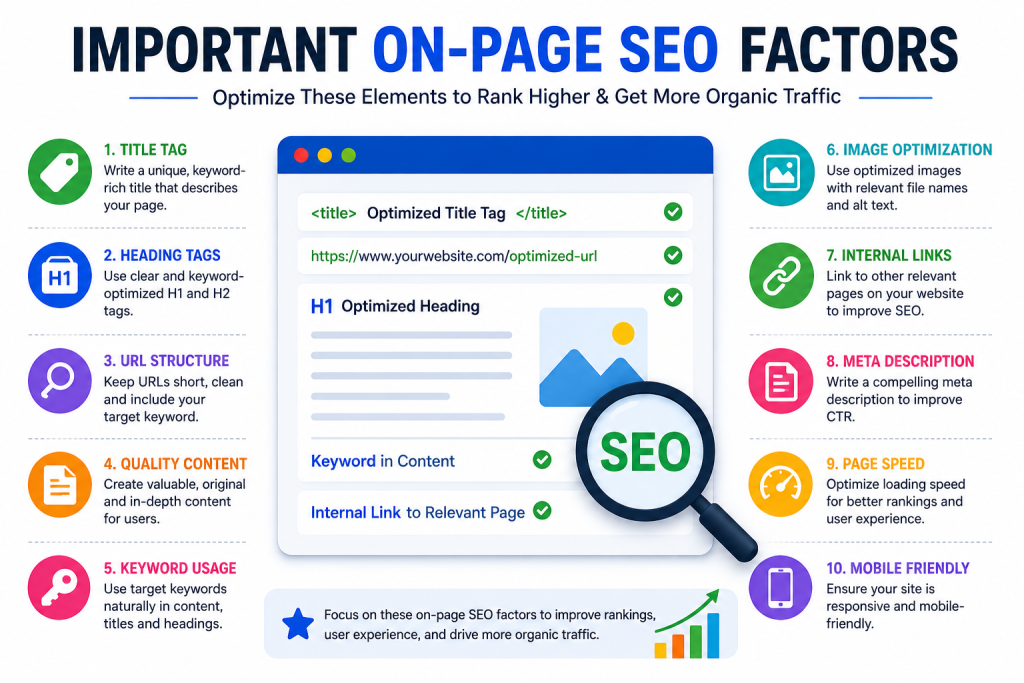
Important On-Page SEO Factors
- Keyword Optimization
Keywords are the words or phrases that people type into search engines. Use your primary keyword naturally in your title, headings, introduction, and content. Avoid keyword stuffing because excessive use of keywords can make content difficult to read. - Title Tag
The title tag tells search engines and users what your web page is about. A good title should be clear, relevant, and include the main keyword whenever appropriate. - Meta Description
A meta description is a short summary of your web page that may appear below the title in search results. It should clearly explain what users can expect from the page and encourage them to click. - Headings
Use headings such as H1, H2, and H3 to organize your content. Your H1 should describe the main topic, while H2 and H3 headings can divide the content into smaller sections. - Search Engine Optimization- Friendly URLs
Keep URLs short, descriptive, and relevant to the page topic. For example, /on-page-so-guide is better than a URL containing random numbers or unnecessary characters. - Internal Linking
Internal links connect one page of your website to another. They help visitors discover related content and help search engines understand the structure of your website. - Image Optimization
Use relevant images and add descriptive alt text. Compressing images can also help improve page loading speed.
Conclusion
On-Page SEO is a fundamental part of digital marketing and SEO. By optimizing keywords, titles, headings, URLs, content, images, and internal links, you can create a website that is easier for both users and search engines to understand. Consistent optimization and high-quality content are key to achieving better organic visibility.