
Introduction
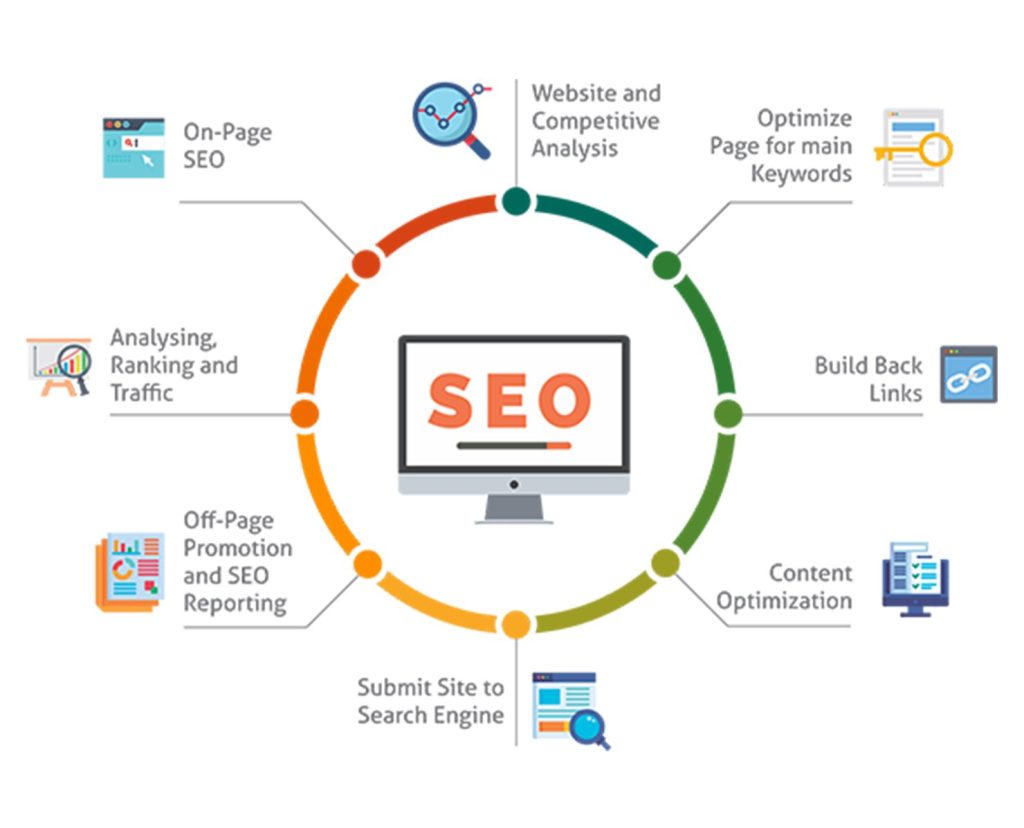
If you have ever wondered how websites appear on the first page of Google, the answer is Search Engine Optimization (SEO). SEO is one of the most powerful digital marketing strategies that helps websites attract visitors organically without paying for advertisements.
Whether you are a student, blogger, freelancer, or business owner, learning SEO can help you increase website traffic, improve online visibility, and even build a successful career in digital marketing. In this guide, you will learn everything from the basics of SEO to advanced optimization techniques in simple language.
What is SEO?
SEO (Search Engine Optimization) is the process of optimizing a website so that it ranks higher in search engine results for relevant keywords. When users search for information, products, or services on Google, search engines display the most useful and relevant pages. SEO helps your website become one of those pages.
The primary goal of SEO is to increase organic traffic, which means visitors who find your website through unpaid search results.
Why is SEO Important?
Every day, billions of searches are performed on Google. If your website appears on the first page, you have a much higher chance of receiving visitors than websites on later pages.
Benefits of SEO
- Increases organic traffic
- Improves brand awareness
- Builds trust and credibility
- Generates quality leads
- Improves user experience
- Reduces dependence on paid ads
- Delivers long-term results
- Provides a better return on investment
How Search Engines Work
Search engines use automated bots called crawlers to discover and organize web pages.
Step 1: Crawling
Bots visit websites and discover pages by following links.
Step 2: Indexing
The collected information is stored in Google’s index, which acts like a giant library of web pages.
Step 3: Ranking
When someone searches for a keyword, Google evaluates hundreds of ranking factors and displays the most relevant pages.
Types of SEO
1. On-Page SEO
On-page SEO includes everything you optimize directly on your website.
Important elements include:
- Keyword research
- Title tags
- Meta descriptions
- SEO-friendly URLs
- Heading tags (H1–H6)
- Content optimization
- Image optimization
- Internal linking
Good on-page SEO helps search engines understand your content while making it easier for users to read.
2. Off-Page SEO
Off-page SEO focuses on building your website’s reputation outside your website.
Common techniques include:
- Guest posting
- Link building
- Social media promotion
- Brand mentions
- Influencer outreach
- Digital PR
High-quality backlinks from authoritative websites improve your website’s credibility.
3. Technical SEO
Technical SEO ensures that search engines can easily crawl and index your website.
It includes:
- XML Sitemap
- Robots.txt
- HTTPS security
- Mobile responsiveness
- Fast loading speed
- Canonical tags
- Structured data (Schema Markup)
- Fixing crawl errors
4. Local SEO
Local SEO helps businesses appear in location-based searches such as “restaurants near me” or “best dentist in Delhi.”
Important local SEO factors include:
- Google Business Profile
- Customer reviews
- Local citations
- NAP consistency (Name, Address, Phone Number)
- Location-specific keywords
Keyword Research
Keywords are the phrases people type into search engines.
Choosing the right keywords is one of the most important parts of SEO.
Types of Keywords
Short-tail Keywords
Example:
- SEO
- Digital Marketing
High search volume but high competition.
Medium-tail Keywords
Example:
- SEO Guide
- SEO Tutorial
Moderate competition.
Long-tail Keywords
Example:
- SEO Guide for Beginners
- How to Learn SEO Step by Step
Lower competition and better conversion rates.
Search Intent
Every keyword has a purpose.
Informational
Example:
“What is SEO?”
Navigational
Example:
“WordPress login”
Commercial
Example:
“Best SEO tools”
Transactional
Example:
“Buy SEO course online”
Creating content that matches search intent improves rankings and user satisfaction.
On-Page SEO Checklist
- Create unique titles.
- Write compelling meta descriptions.
- Use only one H1 heading.
- Organize content with H2 and H3 headings.
- Add keywords naturally.
- Optimize images with descriptive alt text.
- Include internal links to related articles.
- Link to reliable external resources when appropriate.
- Keep paragraphs short and easy to read.
Writing SEO-Friendly Content
High-quality content is the foundation of successful SEO.
Good content should:
- Answer users’ questions clearly.
- Be original and well-researched.
- Include practical examples.
- Use simple language.
- Contain relevant images and illustrations.
- Be updated regularly.
Always write for people first and search engines second.
Title Tags
A title tag tells search engines what your page is about.
Example:
SEO Guide for Beginners – Learn Search Engine Optimization Step by Step
Keep titles between 50–60 characters and include your primary keyword near the beginning.
Meta Descriptions
A meta description is the short summary displayed below your page title in search results.
Example:
Learn SEO from scratch with this complete beginner’s guide. Discover keyword research, on-page SEO, technical SEO, backlinks, and practical optimization tips.
Keep it around 150–160 characters.
URL Structure
A clean URL is easier to understand.
Good example:
yourwebsite.com/seo-guide
Avoid long URLs with unnecessary numbers or symbols.
Image SEO
Images improve engagement, but they also need optimization.
Best practices:
- Use descriptive filenames.
- Add keyword-rich alt text.
- Compress images.
- Use WebP format.
- Resize images before uploading.
Internal Linking
Internal links connect one page of your website to another.
Benefits:
- Improves navigation.
- Increases page views.
- Helps Google discover content.
- Passes authority between pages.
External Linking
Linking to trusted websites adds credibility and helps users access additional information.
Only link to reliable and relevant sources.
Backlinks
Backlinks are one of Google’s strongest ranking signals.
Quality matters more than quantity.
Ways to earn backlinks:
- Guest blogging
- Publishing original research
- Creating infographics
- Writing comprehensive guides
- Digital PR
- Resource page outreach
Avoid buying spammy backlinks.
Technical SEO
A technically optimized website performs better in search engines.
Checklist:
- HTTPS enabled
- XML Sitemap submitted
- Robots.txt configured
- Fast page speed
- Mobile-friendly layout
- Structured data implemented
- Broken links fixed
- Canonical tags added
Core Web Vitals
Google measures user experience through Core Web Vitals.
Important metrics:
- Largest Contentful Paint (LCP)
- Interaction to Next Paint (INP)
- Cumulative Layout Shift (CLS)
Improving these metrics can positively impact both usability and rankings.
Mobile SEO
More than half of web traffic comes from mobile devices.
Ensure your website:
- Uses responsive design.
- Loads quickly.
- Has readable text.
- Includes easy-to-tap buttons.
- Avoids intrusive pop-ups.
Local SEO
If you own a local business:
- Create and verify your Google Business Profile.
- Encourage customer reviews.
- Use local keywords.
- Add your business address and contact details.
- Keep your business information consistent across directories.
SEO Tools
Free Tools
- Google Search Console
- Google Analytics
- Google Trends
- Google Keyword Planner
- PageSpeed Insights
Paid Tools
- Ahrefs
- Semrush
- Moz Pro
- Screaming Frog SEO Spider
Common SEO Mistakes
Avoid these mistakes:
- Keyword stuffing
- Duplicate content
- Thin content
- Slow website speed
- Missing meta descriptions
- Poor mobile optimization
- Broken links
- Ignoring technical SEO
- Buying low-quality backlinks
White Hat vs Black Hat SEO
White Hat SEO
- Helpful content
- Ethical optimization
- Natural backlinks
- Long-term growth
Black Hat SEO
- Keyword stuffing
- Hidden text
- Cloaking
- Spam backlinks
- Risk of Google penalties
Always follow White Hat SEO practices.
Beginner SEO Roadmap
Month 1
- Learn SEO basics.
- Understand search engines.
- Research keywords.
Month 2
- Practice writing SEO-friendly articles.
- Learn WordPress SEO.
- Install an SEO plugin.
Month 3
- Learn Technical SEO.
- Improve website speed.
- Submit your sitemap.
Month 4
- Build quality backlinks.
- Study Local SEO.
- Track rankings and traffic.
Month 5
- Learn content strategy.
- Update old articles.
- Improve internal linking.
Month 6
- Analyze performance.
- Fix weak pages.
- Continue publishing valuable content.
Frequently Asked Questions (FAQs)
What is SEO?
SEO is the process of optimizing a website to improve its visibility in search engine results and increase organic traffic.
Is SEO free?
Yes. Organic SEO does not require payment for clicks, although you may choose to invest in tools or professional services.
How long does SEO take?
SEO is a long-term strategy. Many websites start seeing meaningful improvements within 3–6 months, depending on competition and website quality.
Can I learn SEO without coding?
Yes. Many SEO tasks—such as keyword research, content optimization, and basic WordPress SEO—do not require programming knowledge.
Is SEO a good career?
Yes. SEO is a valuable skill with opportunities in agencies, companies, freelancing, and content marketing.
Conclusion
SEO is not about tricking search engines—it is about creating a website that genuinely helps users. By publishing high-quality content, optimizing your pages, improving website performance, and earning trustworthy backlinks, you can build sustainable organic traffic over time.
Stay consistent, keep learning, and focus on providing value. With patience and regular optimization, SEO can become one of the strongest sources of long-term growth for your website and career.
Pingback: Digital Marketing Blogs | SEO & Online MarketingGuide
Pingback: How to Make Your Website Faster: Easy SEO Tips